
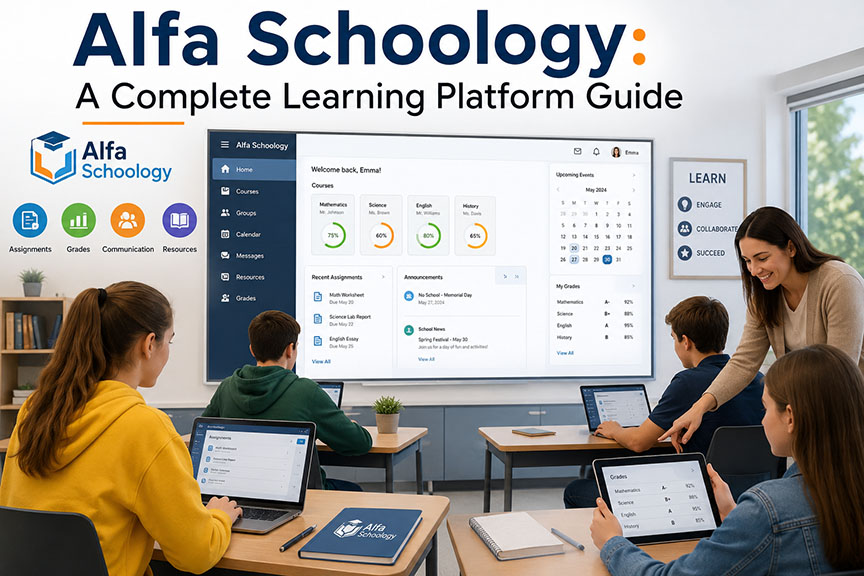
Introduction of Alfa Schoology
Digital learning platforms have transformed the way students, teachers, and parents interact with education. Schools now rely on technology to organize coursework, simplify communication, and support remote learning. Among the many systems available today, Alfa Schoology has attracted attention as an online platform designed to streamline educational activities and improve collaboration within academic communities.
What Is Alfa Schoology?
Alfa Schoology is an educational platform that combines learning management features with communication and classroom organization tools. It enables teachers to create lessons, distribute assignments, assess student performance, and share educational resources in one place.
Learning management systems have become increasingly important as schools adopt blended and online learning models. Platforms like these are designed to reduce administrative tasks while helping students stay engaged with their studies.
Modern educational portals typically offer features such as:
- Assignment management
- Course scheduling
- Grade tracking
- Student-teacher communication
- Digital resource sharing
- Quiz and assessment tools
- Mobile accessibility
These functions allow educational institutions to maintain continuity in learning, whether classes take place in person or online.
The Growing Role of Learning Management Systems
Technology has changed classrooms around the world. Instead of relying solely on textbooks and printed worksheets, schools increasingly use digital platforms to support instruction and collaboration.
Learning management systems provide several advantages:
Better Organization
Teachers can store lesson plans, assignments, and educational materials in a centralized location. Students no longer need to search through emails or paper handouts to find important information.
Easier Communication
Messaging tools help teachers, students, and parents stay connected. Notifications about assignments, grades, and upcoming events can be shared instantly.
Flexible Learning
Students can access coursework from different devices, making education more accessible regardless of location.
Performance Tracking
Teachers gain valuable insights into student progress through grading tools, attendance records, and analytics.
According to the educational technology resources available from the International Society for Technology in Education (ISTE), digital learning tools can support collaboration, personalized instruction, and improved educational outcomes.
External resource: https://iste.org
Key Features Students Can Expect
Students benefit from learning platforms because they bring many academic tools together in one place. Although specific features may vary depending on how a school configures its system, several functions are commonly available.
Assignment Submission
Students can:
- Upload homework online.
- View due dates.
- Track completed tasks.
- Receive teacher feedback.
This reduces confusion and helps learners manage their responsibilities effectively.
Course Materials
Many schools provide:
- Lecture notes
- Reading materials
- Videos
- Presentations
- Practice exercises
Having these resources available online allows students to review lessons whenever necessary.
Calendar and Scheduling Tools
Built-in calendars help students keep track of:
- Exams
- Project deadlines
- Class events
- School announcements
Good time management becomes easier when all important dates are stored in one place.
Progress Monitoring
Students often have access to:
- Grades
- Assignment scores
- Attendance records
- Teacher comments
This transparency encourages greater accountability and self-improvement.
Benefits for Teachers
Educational technology is not only useful for students. Teachers also rely on digital platforms to simplify daily tasks and improve classroom management.
Faster Assignment Management
Instead of collecting paper submissions, teachers can:
- Create assignments digitally.
- Set automatic deadlines.
- Review student work online.
- Provide feedback efficiently.
Streamlined Grading
Digital gradebooks reduce paperwork and allow educators to calculate scores more accurately.
Content Sharing
Teachers can upload:
- Study guides
- Interactive activities
- Video lessons
- Reference documents
This creates a more dynamic learning experience.
Collaboration Opportunities
Many platforms support collaboration through:
- Group projects
- Discussion boards
- Shared documents
- Peer reviews
These tools encourage communication and teamwork among students.
How Parents Benefit From Digital Education Platforms
Parents increasingly want real-time access to their children’s academic progress. Learning management systems often include features that strengthen communication between families and schools.
Parents may be able to:
- Monitor attendance.
- Check assignment completion.
- View grades.
- Receive announcements.
- Contact teachers directly.
Greater transparency helps families provide better support at home and remain actively involved in education.
Mobile Learning and Accessibility
One of the biggest advantages of modern educational platforms is accessibility. Students and teachers are no longer limited to desktop computers.
Many systems support:
- Smartphones
- Tablets
- Laptops
- Web browsers
- Dedicated mobile applications
Mobile access allows users to:
- Check assignments on the go.
- Receive instant notifications.
- Participate in discussions.
- Download educational materials.
This flexibility has become especially important as hybrid and remote learning continue to evolve.
Security and Data Privacy in Educational Platforms
Schools handle sensitive information, including grades, attendance records, and personal data. As a result, security remains a top priority for educational technology providers.
Common security measures include:
- Password protection
- Secure logins
- User permissions
- Encrypted connections
- Administrative controls
Educational institutions must also comply with local privacy regulations and establish clear policies regarding student information.
Students can improve their online safety by:
- Using strong passwords.
- Avoiding account sharing.
- Logging out of public devices.
- Reporting suspicious activity.
Digital literacy and cybersecurity awareness are essential skills in modern education.
Tips for Getting the Most Out of an Online Learning Platform
Students who actively engage with educational tools often achieve better results. Here are several practical strategies.
Create a Study Routine
Set aside dedicated time each day to:
- Review lessons.
- Complete assignments.
- Prepare for exams.
Consistency improves retention and reduces stress.
Check Notifications Regularly
Missing deadlines can affect academic performance. Reviewing notifications daily helps students stay informed.
Organize Digital Files
Keeping folders organized makes it easier to find notes, assignments, and study materials.
Participate in Discussions
Discussion boards and collaborative activities encourage critical thinking and improve communication skills.
Ask for Help
Students should contact teachers whenever they have questions about assignments or course materials.
Challenges of Digital Learning
Although educational platforms offer many benefits, they also present certain challenges.
Screen Fatigue
Spending long hours online can lead to:
- Eye strain
- Reduced concentration
- Mental fatigue
Regular breaks are important.
Internet Access Issues
Reliable internet access remains a challenge in some regions. Schools and governments continue working to improve connectivity.
Technical Difficulties
Users may occasionally encounter:
- Login problems
- Software updates
- Browser compatibility issues
Technical support teams play a critical role in solving these problems quickly.
Self-Discipline Requirements
Online learning often demands greater independence. Students must manage their time effectively and stay motivated.
The Future of Educational Technology
Educational technology continues to evolve rapidly. Artificial intelligence, data analytics, and interactive learning tools are shaping the future of classrooms.
Emerging trends include:
- Personalized learning experiences
- AI-powered tutoring systems
- Virtual classrooms
- Gamified education
- Adaptive assessments
- Enhanced collaboration tools
Schools are increasingly combining traditional teaching methods with digital resources to create more flexible and engaging educational environments.
As technology develops, learning platforms will likely become even more integrated into daily academic life.
Choosing the Right Learning Platform
When evaluating any educational platform, schools and institutions often consider several factors:
- Ease of use
- Security features
- Mobile compatibility
- Communication tools
- Assessment options
- Integration capabilities
- Technical support
- Scalability
The best platform is one that supports both educational goals and the needs of students, teachers, and parents.
FAQs
What is Alfa Schoology used for?
It is used to manage assignments, share learning materials, facilitate communication, and track academic progress within educational environments.
Can students access the platform on mobile devices?
Many learning management systems support smartphones and tablets, allowing users to access coursework from almost anywhere.
Why are online learning platforms important?
They improve organization, simplify communication, and provide flexible access to educational resources.
Do parents have access to student information?
Depending on school settings, parents may be able to monitor grades, attendance, assignments, and school announcements.
Are digital learning platforms secure?
Most educational systems include security measures such as password protection, user permissions, and encrypted connections to safeguard data.
Conclusion of Alfa Schoology
Digital education continues to reshape classrooms by making learning more accessible, organized, and interactive for everyone involved. From assignment management to communication and performance tracking, Alfa Schoology represents the growing role of technology in modern education and highlights how online platforms can support students, teachers, and parents alike.
Read Also: What Is Utanmazkzılar? A Quick Guide
